

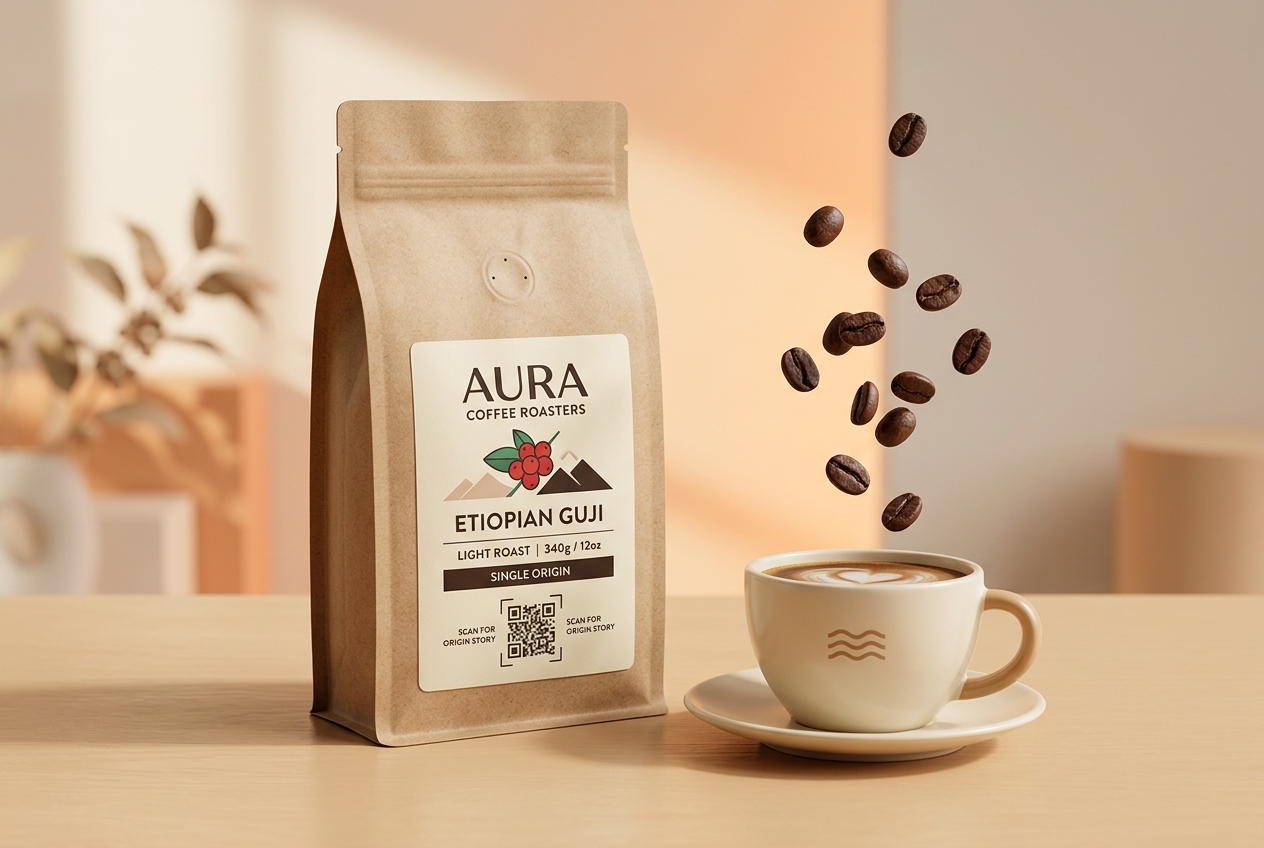
Specialty coffee is more than just a morning caffeine kick; it is a premium craft experience. Modern coffee lovers do not just want to drink coffee—they want to know the story behind it. They care about the farm origin, the elevation, the bean variety, the processing method, the roast profile, and how to brew it perfectly at home.
However, a standard bag of coffee beans has limited physical space. Packing all this details onto a small paper label results in tiny, unreadable text and a cluttered design that detracts from the roaster's brand aesthetic.
QR codes for specialty coffee roasters and bean packaging solve this challenge beautifully. By placing a dynamic QR code on the bag, roasters can bridge the physical packaging to a rich, immersive digital experience.
Here is how specialty coffee roasters leverage QR codes to engage customers, build brand loyalty, and drive repeat subscription sales.
Key Benefits of QR Codes on Coffee Packaging
1. Share the Farm Origin & Traceability Story
Specialty coffee consumers value transparency. They want to know where their coffee comes from and if it was ethically sourced.
- Meet the Farmer: Link the QR code to a page featuring photos or videos of the coffee farm, the family who grew it, and details about their cooperative.
- Traceability Data: Share exact details such as farm altitude, soil type, processing method (natural, washed, honey), and fair trade certifications.
2. Interactive Brewing Guides & Roast Profiles
Every single-origin bean has a unique flavor profile that requires specific brewing parameters to shine.
- Step-by-Step Tutorials: Link to video guides or interactive articles showing how to brew that specific coffee using a V60 pour-over, AeroPress, French Press, or espresso machine.
- Flavor & Roast Profiles: Show a detailed flavor wheel, tasting notes (e.g., jasmine, stone fruit, milk chocolate), and recommended water-to-coffee ratios.
3. One-Tap Reordering & Subscriptions
The best time to sell another bag of coffee is when the customer is actively enjoying their current cup.
- Scan-to-Reorder: Place a QR code linked to a pre-filled shopping cart or subscription sign-up page.
- Subscription Conversion: Offer a small incentive (e.g., "Scan to subscribe and save 10% on monthly coffee delivery") to convert one-off retail buyers into recurring subscribers.
4. Zero-Party Data Collection & Feedback
Understanding customer preferences helps roasters refine their offerings and marketing.
- Customer Feedback: Direct customers to a quick survey where they can rate the roast quality, flavor notes, and share suggestions.
- Email List Growth: Offer a free downloadable brewing handbook or a discount code in exchange for signing up to your newsletter.
Strategic QR Code Placement on Coffee Bags
The Back Label (Technical Details)
Keep the front of your bag clean and minimalist to showcase your brand logo. Place the QR code on the back label, right next to the tasting notes and roast date.
Hang Tags (Premium Aesthetic)
If you sell micro-lots or limited-edition coffees, attach a premium kraft paper hang tag to the neck of the bag. Print a dynamic QR code on the tag, making the bag feel like a curated, exclusive product.
The Bottom Gusset (Unboxing Surprise)
For a playful touch, place the QR code on the bottom of the coffee bag. When the customer picks up the bag or finishes their coffee, they discover a hidden QR code with a message like: "Running low? Scan to roast your next batch."
How to Get Started with QR Zam
- Host Your Content: Create a dedicated landing page on your website for each coffee lot, or upload a PDF brewing guide.
- Generate a Dynamic QR Code: Sign in to qrzam.com and create a dynamic URL QR code. This allows you to reuse the same printed labels for next season's harvest by simply updating the destination URL in your dashboard.
- Design for Your Brand: Customize the QR code color palette to match your roastery's brand colors. Add your logo to the center and use rounded eye corners for a softer, organic look.
- Print & Test: Download the high-resolution vector SVG format. Test the printed code under different lighting conditions to ensure it scans instantly on the retail shelf or at home.