

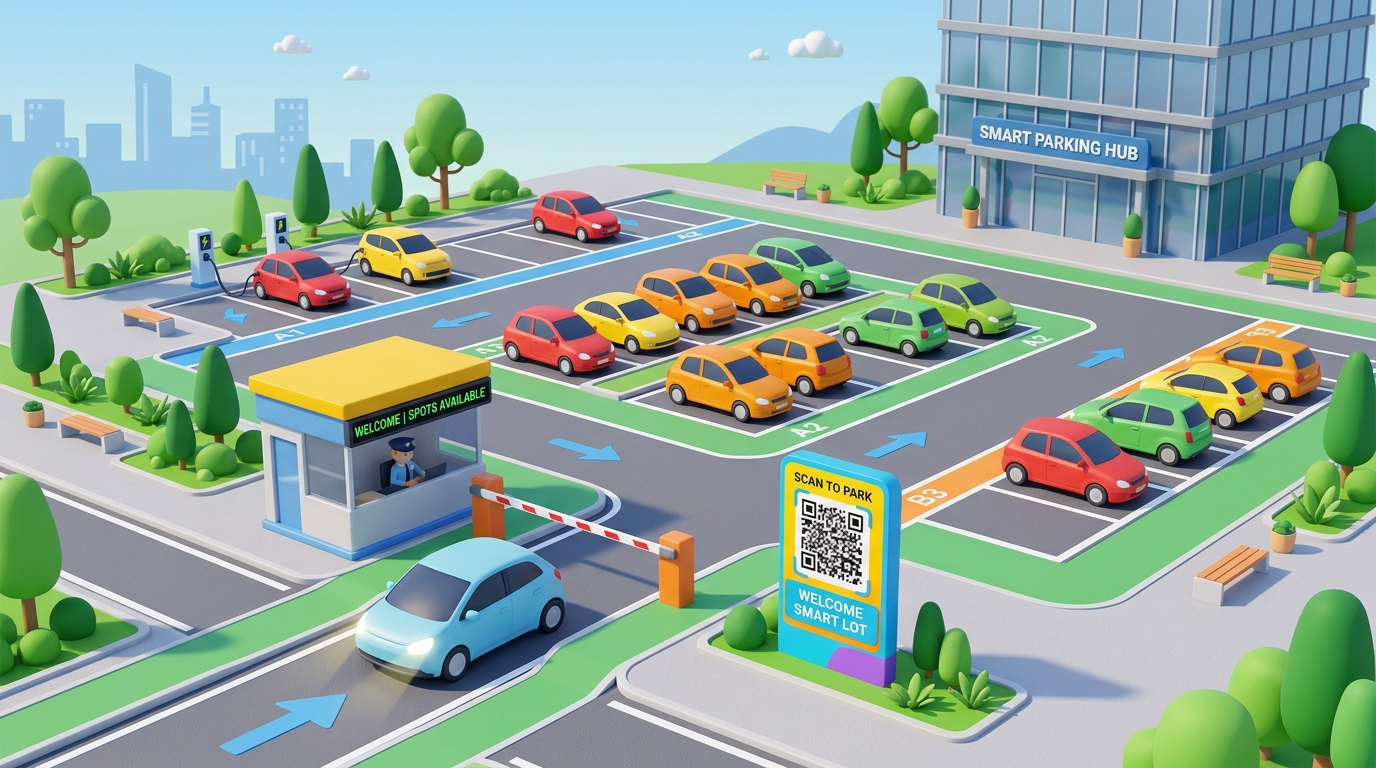
In modern cities, parking convenience is a major differentiator. QR codes have transformed parking lot management, making vehicle entry, exit, and payments seamless, fast, and completely contactless.
By eliminating physical paper tickets and reducing reliance on expensive payment kiosks, QR codes offer parking operators a cost-effective, scalable solution while providing drivers with a frictionless, mobile-first experience.
Key benefits of parking QR codes
Frictionless Mobile Payments
QR codes allow drivers to pay for their parking directly from their smartphones. By scanning a code on a garage pillar, elevator wall, or exit sign, users can access a secure payment web portal to complete their transaction via credit card, Apple Pay, or Google Pay. This eliminates the need to stand in long lines at physical payment machines.
Reduced Operating and Maintenance Costs
Traditional parking systems require ticket dispensers, paper rolls, physical payment terminals, and card readers, all of which are prone to mechanical failure and require frequent maintenance. QR code-based parking systems minimize physical hardware, significantly lowering overhead costs and paper waste.
Improved Traffic Flow and Less Congestion
Peak hours at shopping centers, office buildings, and event venues often lead to long queues of vehicles waiting to pay at exit gates. Contactless payments via QR codes allow drivers to pay in advance before returning to their vehicles, ensuring rapid exits and reducing congestion.
Real-Time Data Insights and Analytics
By utilizing a professional dynamic QR code generator, operators can track when and where scans occur. This provides valuable analytics on peak parking hours, average dwell time, and user demographics, enabling data-driven decisions on pricing and staffing.
Easy Integration with Validation Programs
QR codes make it simple to implement parking validation programs with nearby merchants. Retailers, restaurants, and cinemas can scan a customer's parking QR code to apply discounts or validate free parking sessions instantly via a web-based dashboard.
Steps to create a QR code for parking payments with QR Zam
Here are the step-by-step instructions to set up a QR code for your parking facility:
Step 1: Go to https://qrzam.com and select "URL" or "Payment" depending on your integration. For enterprise parking systems, you can leverage the QR code API to generate unique QR codes for individual tickets.
Step 2: Enter your digital parking portal URL or payment gateway link.
Step 3: Customize the QR code design. Align the colors with your parking brand, add your company logo, and select a clear frame with a Call to Action (CTA) like "Scan to Pay Parking."
Step 4: Test the QR code using different mobile devices under various lighting conditions (including low light typical of underground parking garages).
Step 5: Download the high-resolution file format (such as SVG or PNG) for professional printing. Place the codes prominently on garage pillars, pay stations, and near exits.
The excellent application of QR codes for parking lot management in practice
Integrating QR codes into parking operations offers multiple touchpoints to enhance driver convenience and operational efficiency:
Ticketless Entry & Exit
Instead of printing a paper ticket upon entry, drivers can scan a QR code at the entrance barrier. This registers their entry time digitally on their phone. When leaving, they scan a similar QR code at the exit gate, which calculates the duration and prompts payment, opening the barrier automatically once the transaction is complete.
Scan-to-Pay Signage in Pedestrian Areas
Placing large, highly visible QR code signs in elevator lobbies, pedestrian walkways, and waiting areas encourages drivers to pay for their parking before they even get back into their cars. This keeps exit lanes completely clear.
Merchant Validation QR Codes
Nearby shops and restaurants can be provided with a dedicated validation QR code or app portal. When a customer makes a purchase, the cashier scans the customer's parking code, immediately applying a validation discount (e.g., 2 hours of free parking) directly to the session.
Pre-Booked Space Reservations
For high-demand areas like airports or concert venues, customers can book their parking spot online in advance. The system emails them a unique QR code pass, which they scan at the gate to gain entry to their reserved parking area.
Valet Parking Efficiency
Valet services can replace paper ticket stubs with QR codes. When a customer is ready to leave, they scan the QR code on their valet receipt to request their car and pay the valet fee, reducing wait times and improving customer satisfaction.
FAQs
1. Do drivers need to download a specific app to scan the parking QR code?
No. Standard smartphone cameras on iOS and Android can detect and scan QR codes natively. Scanning the code opens the web browser on the driver's phone, taking them directly to the parking portal or payment page without requiring any app installations.
2. Can we change the payment URL after the QR codes are printed on the signs?
Yes. By generating dynamic QR codes through QR Zam, you can modify the destination URL at any time in your dashboard. The physical QR code printed on the sign remains exactly the same, preventing the need for costly reprinting.
3. What size should the parking QR codes be to scan easily?
For signs placed in pedestrian walkways or pay stations, the QR code should be at least 2x2 inches (5x5 cm). For drive-up signage that drivers scan from their car windows, the QR code should be significantly larger (at least 12x12 inches) and placed at window height for easy scanning.
4. How does QR Zam handle bulk generation for individual spaces?
If you manage a reserved parking lot where each spot has a unique payment or booking link, you can use QR Zam's bulk generation tools or developer API to create hundreds of customized QR codes simultaneously.
5. Can QR codes work in low-light environments like underground garages?
Yes. By customizing your QR code with high-contrast colors (e.g., dark black patterns on a clean white background) and maintaining a generous quiet zone around the pattern, modern smartphone cameras can easily decode them even in dimly lit underground structures.