

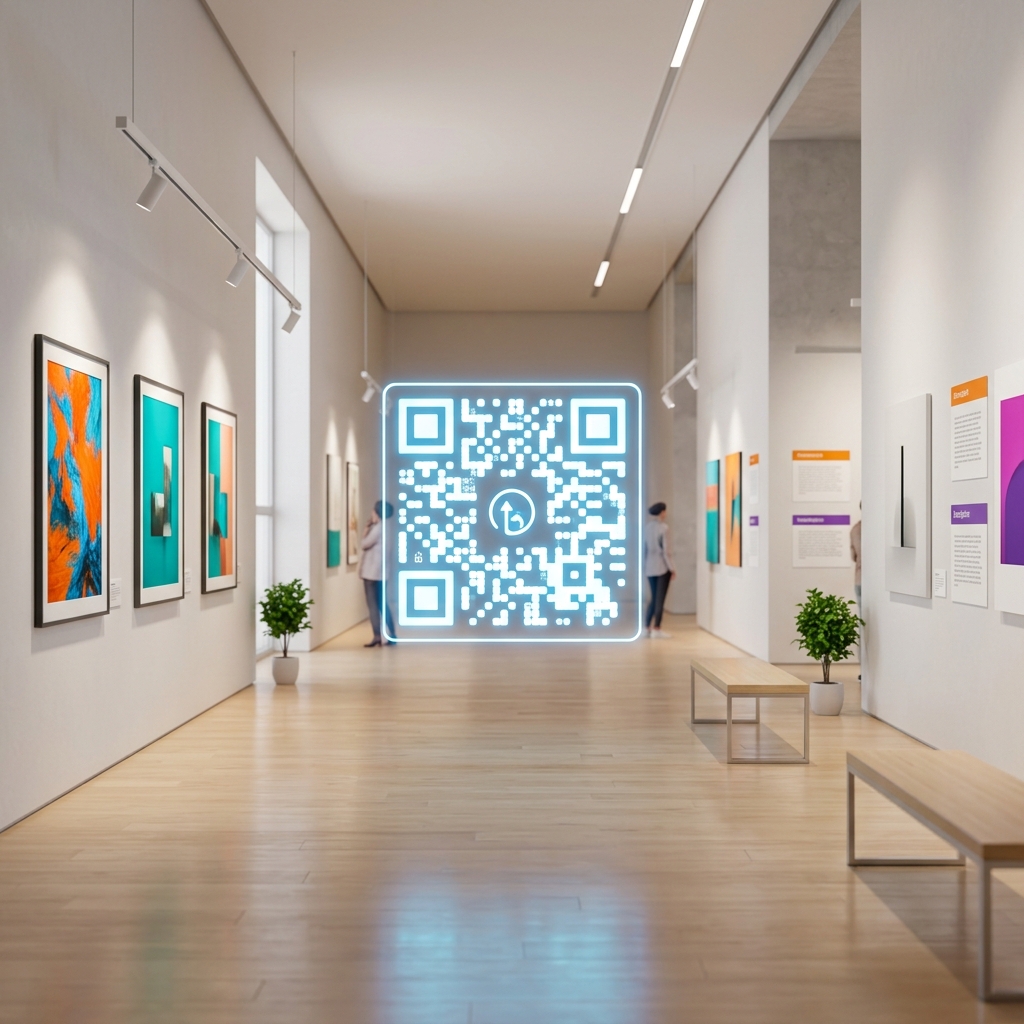
In today's digital era, museums, exhibition halls, and art galleries are constantly looking for innovative ways to engage visitors without cluttering their physical spaces. While traditional placards and printed guides offer limited information, dynamic QR codes serve as an instant gateway to a rich multimedia experience. By placing QR codes next to exhibits, institutions can deliver deep-dive historical context, artists' commentary, high-resolution videos, and interactive maps directly to visitors' smartphones.
QR codes have emerged as a vital tool for modern cultural institutions. They act as an elegant, low-cost bridge that eliminates hardware overhead, supports multi-language visitors, and yields actionable insights to improve future exhibitions.
Key Benefits of QR Codes for Museums and Art Galleries
1. Seamless Contactless Audio Guides
Renting out physical audio guide devices involves significant overhead: charging, sanitizing, storage, and customer support. QR codes allow a "Bring Your Own Device" (BYOD) model. Visitors simply scan the QR code next to a display using their own phone cameras to launch the audio guide instantly.
2. Multi-Language Adaptability
Instead of printing descriptions in multiple languages and cluttering wall space, museums can use QR Zam's Smart Routing. A single QR code detects the visitor's smartphone browser language and automatically redirects them to the translation (e.g., French, Japanese, or Vietnamese), creating a clean and accessible gallery layout.
3. Real-Time Exhibition Analytics
With physical printed guides, curators cannot measure visitor engagement. Dynamic QR codes change that. By using QR Zam, you can track exactly how many visitors scan each code, which exhibits receive the most attention, peak visitation times, and the visitors' language preferences.
4. Interactive and Immersive Learning
Move beyond text-only placards. A QR code can direct visitors to 3D virtual reconstructions of broken artifacts, behind-the-scenes video documentaries of the artist at work, or educational quizzes for student groups.
Steps to Create a QR Code for Your Exhibition with QR Zam
Creating custom QR codes for your museum or gallery is straightforward:
- Step 1: Go to QR Zam and log into your dashboard.
- Step 2: Select Smart Routing or URL depending on whether you want multi-language auto-redirects.
- Step 3: Enter the destination URLs (such as audio streams, PDF guides, or localized web pages).
- Step 4: Customize the style. Match your gallery's aesthetic by choosing minimal colors, clean frames, and uploading the museum's logo as the center graphic.
- Step 5: Download the high-resolution vector files (SVG or EPS) to ensure perfect print quality on gallery labels and banners.
How Museums and Galleries Use QR Codes in Practice
Interactive Audio Tours
Instead of group tours that can get noisy and disruptive, visitors can go on self-guided tours at their own pace. Each room or major piece of art features a dedicated QR code that initiates a curated audio narration or music playlist matching the theme.
Seamless Virtual Donation Pillars
Many galleries rely on donations to stay open. By placing a QR code on donation pillars and exits, visitors can scan to donate securely via Apple Pay, Google Pay, or Credit Cards in just a few clicks.
Gift Shop Integrations
If a visitor falls in love with a painting, they can scan its QR code to buy a high-quality print or a related monograph directly from the museum's e-commerce store, which is then shipped to their home address.
Virtual Map and Wayfinding
Help visitors navigate large multi-story museum complexes. Place QR codes near elevator banks and entry halls that load an interactive, mobile-friendly map of the building.
FAQs
1. Should we use static or dynamic QR codes for our exhibits?
We strongly recommend using dynamic QR codes. If you need to update an audio file, correct a typo in the description, or redirect the exhibit link to a new page, dynamic QR codes allow you to change the destination URL in your dashboard without ever reprinting the physical placard.
2. Do visitors need a special app to scan the QR codes?
No. Almost all modern Android and iOS devices have built-in QR code scanners in their native camera apps. Visitors simply open their camera, point it at the code, and tap the link that appears.
3. Can we track tourist demographics using QR codes?
Yes. With QR Zam's dynamic analytics, you can view the geographical location and language settings of the devices scanning your codes. This helps you understand where your international visitors are coming from and which translation languages are in highest demand.