

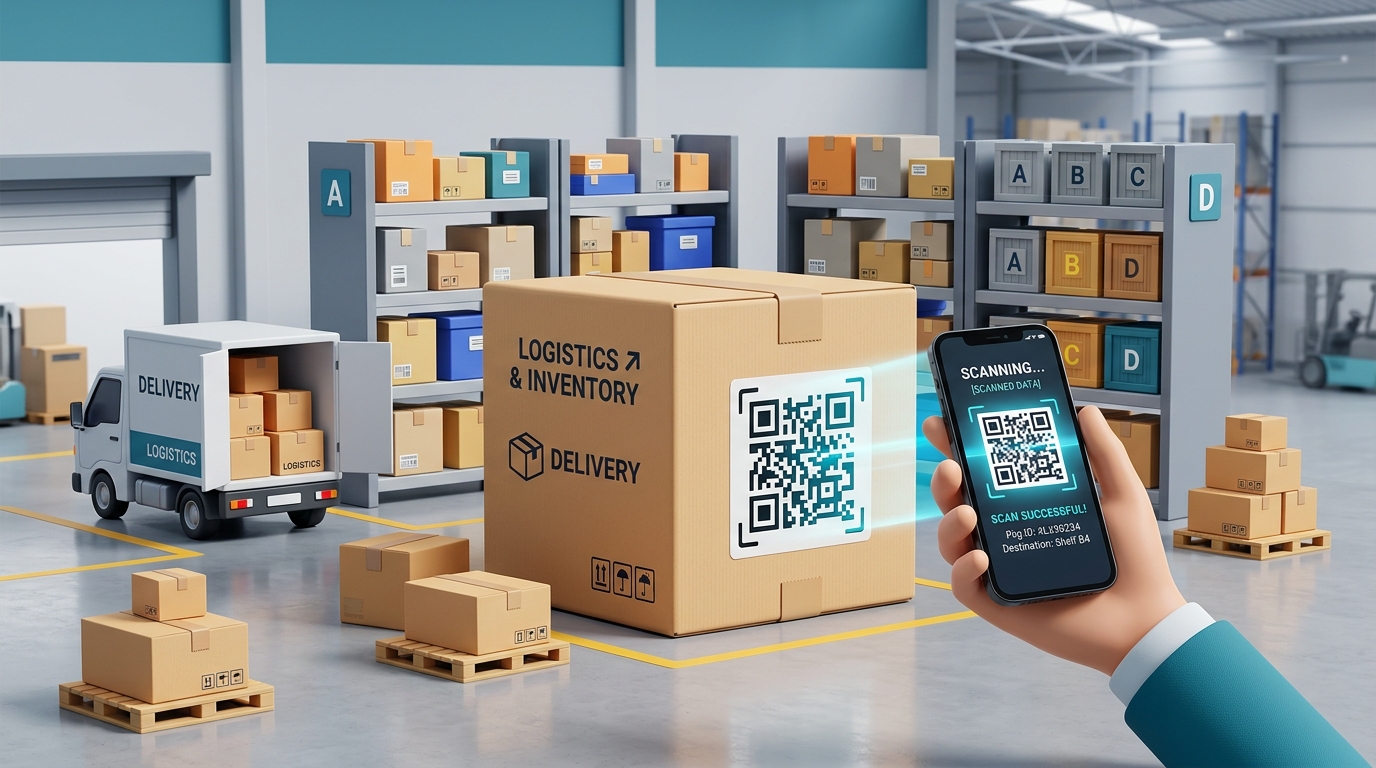
In the fast-moving world of supply chain and logistics, efficiency, speed, and accuracy are the core components of business success. Traditional pen-and-paper tracking methods or manual data entry are slow and highly prone to human errors, causing costly delays and inventory discrepancies.
QR codes have revolutionized asset tracking, logistics, and inventory management, making the entire workflow faster, simpler, and much more accurate.
Key Benefits of QR Codes in Logistics
1. Real-Time Tracking and Inventory Visibility
Unlike traditional barcodes, QR codes can store a massive amount of data, including URLs, serial numbers, batch details, and shelf locations. When scanned, they provide instant access to real-time information, helping managers monitor inventory levels, stock status, and shipping updates on the fly.
2. Drastically Reduced Data Entry Errors
Manual typing is prone to mistakes. By replacing manual logging with a single scan, logistics staff can eliminate human error, ensuring that the correct products are tracked, packaged, and shipped to the right destinations.
3. Cost-Effective and Scalable Implementation
QR codes are incredibly cheap to implement. They do not require specialized hardware like expensive laser barcode scanners; workers can simply use their company smartphones or tablet cameras to scan them. You can print them on standard paper or durable adhesive labels.
4. Simplified Asset Lifecycle Management
Each asset can be assigned a unique dynamic QR code that tracks its entire lifecycle—from manufacture date, maintenance history, current operator, to disposal status. This helps companies optimize asset utilization and stay on top of regular maintenance.
Steps to Generate QR Codes for Inventory Management with QR Zam
Creating a system of tracking QR codes for your assets and inventory is simple with QR Zam:
Step 1: Visit https://qrzam.com and navigate to the Bulk Generator or standard generator tool.
Step 2: Prepare a spreadsheet containing details of your assets, including name, tracking URL, or serial number.
Step 3: Select the QR code type (e.g., Dynamic URL or Text) and upload your spreadsheet.
Step 4: Customize the QR code design by adding a logo, using distinct colors for different categories, and applying a readable frame with a label like "Scan to Check Stock".
Step 5: Download the generated batch in vector formats (SVG/PDF) for crisp, professional printing.
Step 6: Stick the printed QR codes onto your products, pallets, or warehouse shelves.
Practical Applications of QR Codes in Warehouse Operations
QR codes act as a digital bridge in various supply chain settings, helping teams coordinate operations and minimize bottlenecks:
Warehouse Shelving and Bin Location
Label warehouse shelves and individual bins with QR codes. When stocking new inventory, warehouse workers scan the shelf's QR code to log the exact location of the item in the database, allowing team members to locate products in seconds during order picking.
Product Authentication and Serialization
Counterfeiting is a major challenge in logistics. By placing a unique, serialized dynamic QR code on product packaging, customers and distributors can scan the package to verify product authenticity, check batch numbers, and access digital warranties.
Inbound and Outbound Logistics
Attach QR codes to packing slips and shipping crates. Scanning the QR code at receiving or dispatch bays instantly registers shipments as "Received" or "Shipped" in the Central Inventory Management system, triggering automated emails or invoice updates.
Team Tool and Equipment Checkouts
Logistics hubs utilize expensive equipment like forklifts, scanners, and safety gear. Attaching QR codes to these tools allows employees to scan and log check-out and check-in times, creating a digital audit trail and reducing asset loss.
Frequently Asked Questions (FAQs)
1. Can we use QR codes instead of traditional 1D barcodes? Yes, QR codes are a superior alternative to traditional barcodes. They hold up to a hundred times more data, can be scanned from any angle (360 degrees), and remain readable even if up to 30% of the code pattern is dirty or damaged.
2. Why should we use Dynamic QR Codes for logistics tracking? Dynamic QR codes encode a redirect URL, which keeps the pixel pattern simple and easy to scan. It also allows you to update the target link or destination data at any time without changing the printed code itself, making it highly flexible as inventory structures change.
3. What happens if a QR code on a package gets dirty or scratched? QR codes feature built-in Reed-Solomon error correction. This mathematical mechanism allows scanners to reconstruct missing or obscured data. Even if the code is partially torn or dirty, it can still scan successfully.
4. Do logistics workers need special scanners to read QR codes? No. One of the greatest benefits of QR codes is that they can be scanned using standard smartphones, tablets, or rugged industrial handhelds. This saves thousands of dollars in hardware deployment costs.