

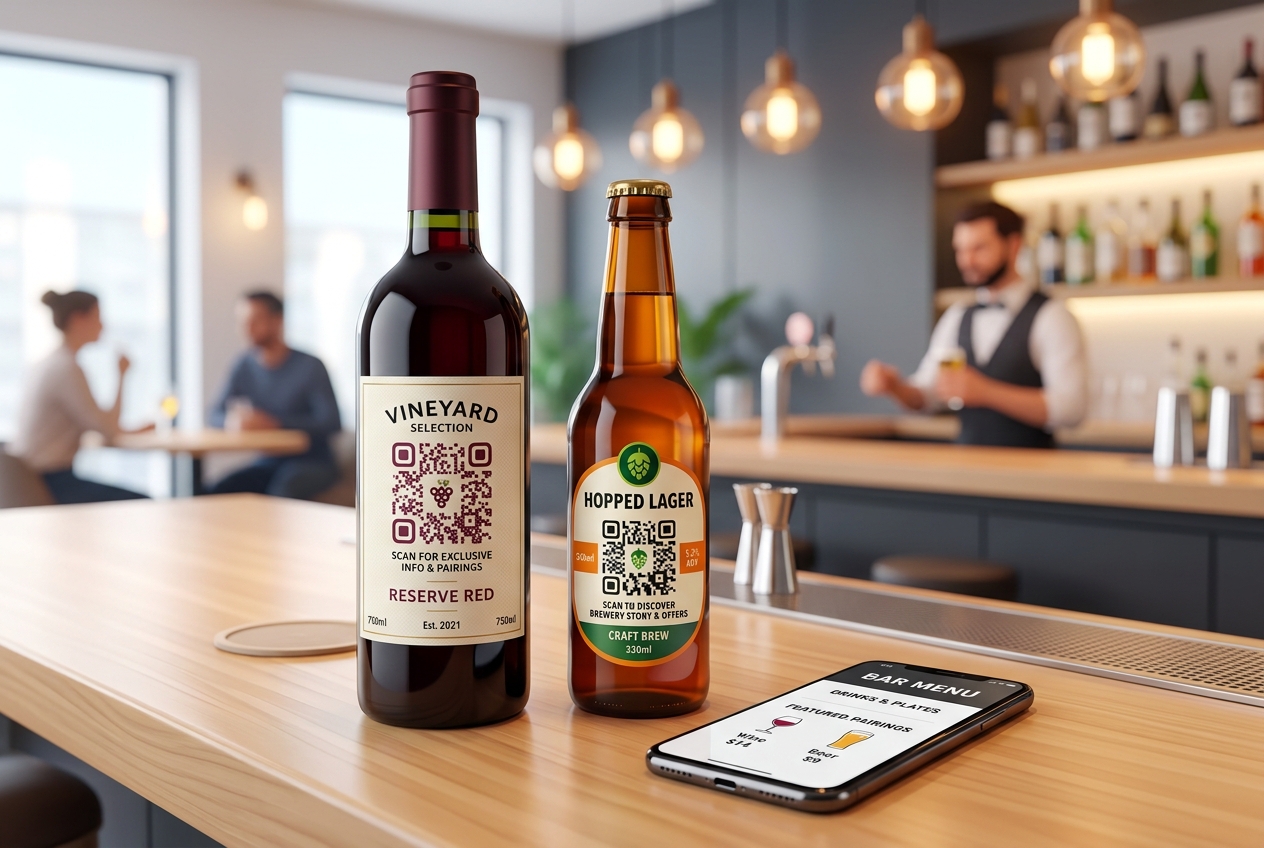
In the highly competitive craft beverage market, connecting with consumers on a personal level is key to building a loyal brand. Craft breweries and boutique wineries have rich stories to tell—from the specific hops harvested for a batch of IPA to the unique soil and microclimate (terroir) that shaped a vintage of Pinot Noir.
However, bottle labels and packaging have very limited space to share these complex narratives.
Custom QR codes have become the ultimate solution. By placing a custom qr code on a bottle label, can wrap, or tasting room table, beverage makers can instantly transport consumers from their physical glass to a rich digital experience.
Key Benefits of QR Codes for Breweries and Wineries
1. Interactive Tasting Notes & Food Pairings
Instead of trying to fit tasting descriptions in microscopic font on the back label, a QR code can direct customers to a rich digital experience. When scanned, it can show detailed flavor profiles, aroma notes, serving temperature recommendations, and curated food pairing guides.
2. Digital Tasting Room Menus
In tasting rooms and taprooms, printing paper menus for every tap list change is costly and wasteful. Utilizing a digital restaurant qr menu allows breweries and wineries to update their active tap list, seasonal releases, and pricing in real time. If a keg runs dry, the staff can mark it as sold out instantly on the digital backend.
3. Driving Direct-to-Consumer (DTC) Sales & Wine Clubs
For wineries and breweries, bottle clubs and subscription programs are highly profitable. A dynamic QR code on the bottle label can lead directly to a signup page for your Wine Club or Beer Release mailing list. When a customer opens a bottle at home and loves it, they are just a quick scan away from joining your membership.
4. Direct Feedback and Review Collection
Want to know what customers think of a new experimental brew? Place a QR code on the taproom table tents or can label with the call-to-action "Rate this batch." It can route them directly to a feedback form, Untappd check-in, or your google review qr code to build your online rating profile.
Steps to Create QR Codes for Beverage Labels with QR Zam
Creating high-quality, scan-ready QR codes for packaging requires a reliable qr code generator. Here is how to set it up:
- Step 1: Go to QR Zam and create a Dynamic URL QR code.
- Step 2: Enter the URL of your product page, tasting video, or taproom menu.
- Step 3: Customize the design. Match the QR code color scheme to your label design (e.g., deep burgundy for red wine labels, warm amber for IPAs). Add a custom logo in the center.
- Step 4: Download the vector file format (SVG or EPS). This ensures the QR code remains crystal clear when scaled and printed on high-resolution bottle labels.
- Step 5: Test the print on a bottle mockup using a smartphone to ensure it scans perfectly under different lighting conditions.
How Breweries and Wineries Use QR Codes in Practice
Smart Packaging & Vintage Tracing
Wineries use dynamic QR codes to track different vintages. Because the printed code remains the same, they can route traffic dynamically based on the year of production. Scanners can see the exact harvest dates, weather conditions of that season, and aging process details.
Taproom Table Tents
Taprooms place QR codes on wooden table stands. Guests scan the code to view the live tap list, order food from a partner kitchen, or pay their bill using their mobile browser, reducing wait times and pressure on taproom staff.
Event & Festival Banners
At busy beer festivals or wine tastings, standing out is difficult. Breweries and wineries display giant QR codes on their banners. Passersby can scan the code to instantly download a digital brochure of the pour list, sign up for a giveaway, or follow the brand on social media.
FAQs
1. Why should breweries and wineries use dynamic QR codes instead of static ones?
Dynamic QR codes are critical because tap lists, vintages, and menu items change constantly. With a dynamic QR code, you can update the destination URL at any time without having to reprint your bottle labels, menus, or promotional banners. They also provide qr code tracking statistics to measure scan numbers and locations.
2. Can QR codes scan on curved bottle surfaces or wet cans?
Yes, if sized and positioned correctly. Ensure the QR code is not placed on an extreme curve that wraps around the side of the bottle. Keep it on a flatter section of the label, and ensure the print quality has high contrast. Glossy, wet surfaces can cause glare, so utilizing matte labels or high-contrast designs helps improve scanning reliability.
3. Is there a way to limit access by age?
Yes. When routing users to your website via the QR code, you can implement an age-gate on your landing page to ensure visitors verify they are of legal drinking age before viewing the content.