


QR Codes vs. NFC: Which is Better for Your Marketing Campaigns?
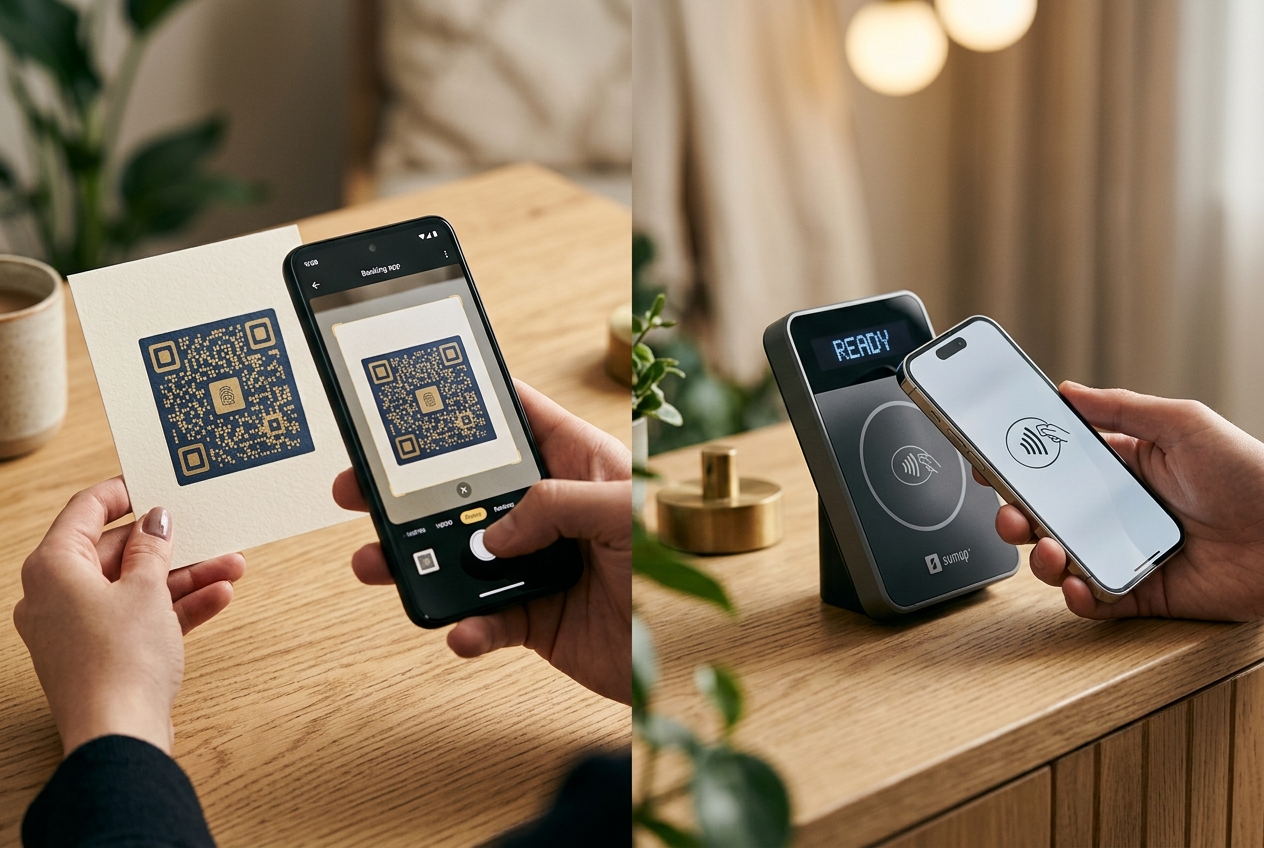
In an increasingly contactless world, bridging the gap between physical marketing and digital experiences is crucial for brands. Two technologies lead this revolution: QR Codes (Quick Response) and NFC (Near Field Communication).
Both tools allow customers to scan or tap physical objects with their smartphones to open websites, download apps, view menus, or make payments. But which technology is the right choice for your business?
In this guide, we will break down the differences between QR codes and NFC across costs, setup complexity, user experience, tracking capabilities, and flexibility, helping you choose the best tool to maximize your marketing ROI.
What is the Difference Between QR Codes and NFC?
Before diving into the comparison, let's briefly define how each technology works from a user perspective:
- QR Codes are two-dimensional barcodes that contain visual patterns. To scan a QR code, a user opens their smartphone camera (or a scanner app), points it at the code, and taps the screen.
- NFC relies on tiny radio microchips embedded in stickers, cards, or tags. To activate an NFC tag, a user brings their smartphone within a few centimeters of the tag (usually touching it) to trigger the action.
Head-to-Head Comparison
| Feature | QR Codes | NFC (Near Field Communication) |
|---|---|---|
| Cost | Free to generate; standard printing costs. | Requires purchasing physical NFC microchips ($0.15 to $1+ per tag). |
| Setup Complexity | Very Low. Generate online, download, and print. | Moderate. Buy chips, program each chip manually, and deploy physically. |
| Scanning Range | Long Range (from a few inches to yards away depending on size). | Micro Range (requires physical contact or being within 2-4 cm). |
| Device Compatibility | 100% of modern smartphones with cameras. | Most modern smartphones, but older models may lack NFC support or require manual activation. |
| Aesthetics & Branding | Highly customizable (colors, logos, AI-generated designs). | Can be hidden behind graphics, but requires clear instructions to tap. |
| Content Updates | Instant (when using Dynamic QR Codes). | Requires physically rewriting the chip unless linked to a dynamic URL. |
| Analytics & Tracking | Rich scan analytics (location, device, time, IP address). | Tracking is possible only if the tag routes to a trackable URL redirect. |
Deep Dive: Key Marketing Considerations
1. Implementation Costs and Scalability
For bootstrapped startups and large-scale campaigns alike, budget is a primary factor.
- QR Codes: QR codes are incredibly cost-effective. You can generate them for free or for a low subscription cost on platforms like QR Zam. Once generated, they can be printed on existing flyers, posters, packaging, or product tags. The marginal cost of adding a QR code to a printed asset is zero.
- NFC: NFC tags require physical hardware. Every single tag contains a copper antenna and a microchip. If you want to put NFC tags on 10,000 product packages, you must purchase 10,000 NFC chips. Additionally, there are labor costs involved in programming each chip and manually applying them to your physical assets.
Winner: QR Codes for affordability and scaling.
2. User Friction and Experience
How easy is it for your customers to engage?
- QR Codes: Almost everyone knows how to scan a QR code. It requires no explanation. The user opens their camera app, points, and clicks. However, it does require a few steps: taking out the phone, unlocking it, opening the camera, and focusing.
- NFC: NFC offers a magical, friction-free experience. There is no need to open a camera app. The user simply taps their phone against the designated hotspot. It is fast, intuitive, and feels premium. However, the downside is that users must be physically next to the tag, and some users still don't know what NFC is or where the reader is located on their device.
Winner: NFC for micro-interactions, QR Codes for familiarity.
3. Versatility and Physical Placement
Where can you place these assets?
- QR Codes: QR codes can be displayed anywhere you can show an image. This includes billboards, TV commercials, digital screens, restaurant windows, T-shirts, and books. They can be scanned from a distance.
- NFC: Because NFC requires proximity (2-4 cm), it cannot be used on TV screens, billboards, or out-of-reach posters. It is strictly limited to physical, touchable objects.
Winner: QR Codes for unlimited placement options.
4. Tracking and Analytics
How do you measure campaign performance?
- QR Codes: With dynamic QR codes, you get access to robust analytics. Platforms like QR Zam allow you to track scan volume, geographic location, device type, scanning time, and referral paths. This data is updated in real-time, letting you run A/B tests and optimize conversion rates.
- NFC: NFC chips themselves do not track scans. To get analytics, you must program the NFC chip to point to a dynamic link that records the redirect event. While possible, it requires setting up redirects manually for each tag.
Winner: QR Codes for built-in, easy-to-use marketing analytics.
When to Use Which?
Choose QR Codes if:
- You are on a budget: You want to scale your campaign across thousands of prints without hardware costs.
- You need distance scanning: You are putting codes on posters, banners, retail windows, or packaging on high shelves.
- You want rich analytics: You need to track campaign performance and scan metrics to calculate ROI.
- You need content flexibility: You want to change the destination URL (e.g., updating a menu or promotion) without reprinting physical materials.
Choose NFC if:
- You want a premium, high-tech experience: Ideal for luxury retail, smart home products, or interactive museum exhibits.
- You are creating smart products: Embedding tags inside shoes, apparel, or electronics for authentication and register setups.
- You need high-security transactions: Ideal for payment processing, physical access control, or secure logins.
The Hybrid Strategy: The Best of Both Worlds
Many forward-thinking brands don't choose between the two—they use both.
By printing a QR code on a card or display stand that also has an embedded NFC chip, you cater to all users. Tech-savvy customers can simply tap their phone, while others can scan the visual QR code. Both the visual code and the NFC tag can link to the same Dynamic QR link managed on QR Zam, consolidating all your scan and tap analytics into one clean dashboard.
Ready to launch your next contactless marketing campaign? Start creating high-converting dynamic QR codes and smart links today.