


Green Marketing: How QR Codes Help Brands Go Paperless and Boost Sustainability
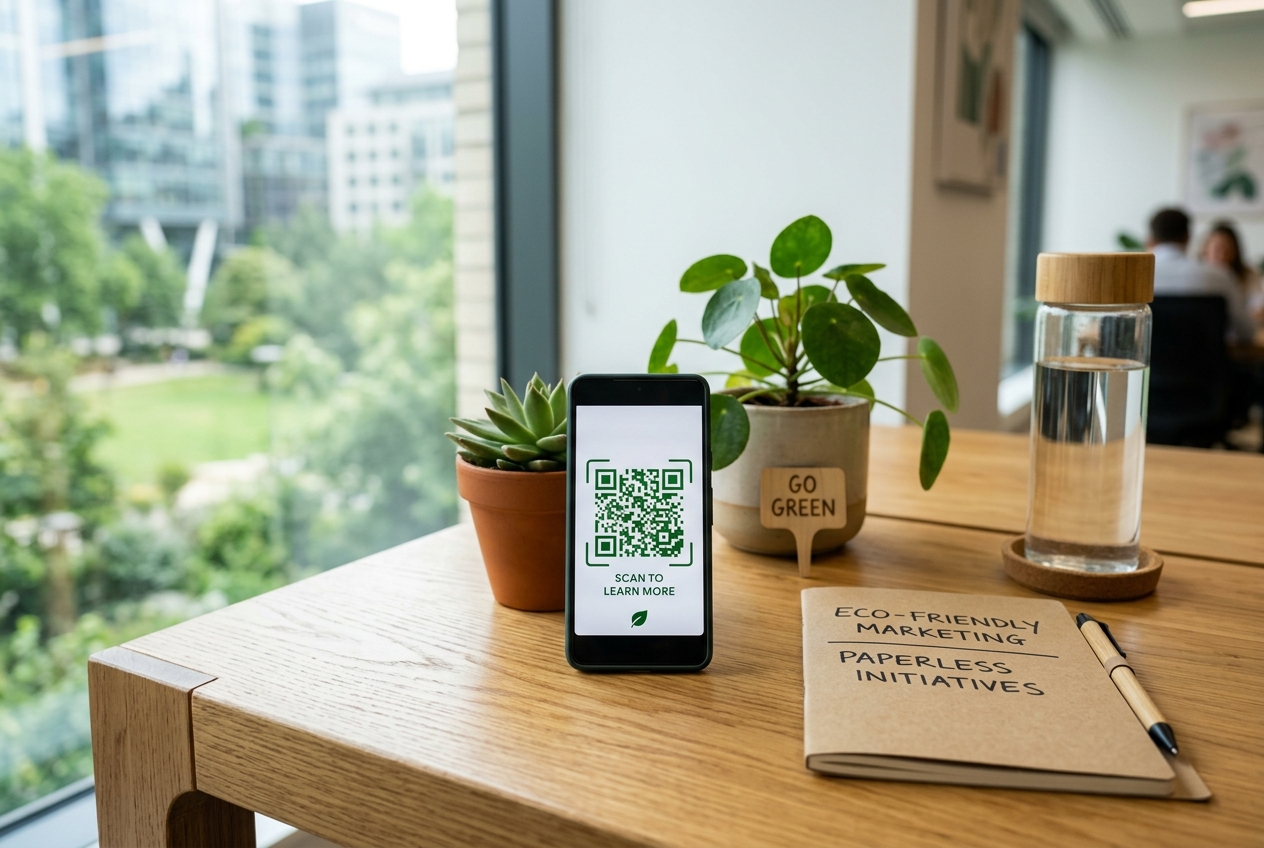
In today's marketplace, consumers are more environmentally conscious than ever. A growing majority of shoppers actively seek out and support brands that demonstrate a genuine commitment to sustainability. For businesses, this shift represents both a challenge and an opportunity: how to transition traditional marketing strategies to align with eco-friendly values without sacrificing effectiveness or ROI.
One of the simplest, most cost-effective ways to achieve this is by embracing the "paperless" revolution. And at the heart of this transition is the humble QR code.
By replacing physical printed materials with modern, dynamic QR codes, businesses can drastically reduce their paper waste, lower print costs, and deliver rich, engaging digital experiences.
In this guide, we will explore how QR codes can serve as a catalyst for your brand's green marketing initiatives, and how you can implement them today to boost your sustainability credentials.
The Environmental Cost of Traditional Print Marketing
Traditional marketing campaigns are incredibly resource-intensive. Every year, trillions of flyers, brochures, product catalogs, corporate directories, and business cards are printed, distributed, and—all too often—immediately thrown away.
The environmental footprint of this cycle is massive:
- Deforestation: Large-scale print production consumes millions of trees annually.
- Water Consumption: Paper manufacturing is a highly water-intensive process, requiring gallons of water for every single sheet produced.
- Carbon Footprint: The manufacturing, chemical treatment, transport, and disposal of physical materials contribute significantly to global greenhouse gas emissions.
- Waste Generation: The vast majority of direct mail and promotional materials end up in landfills within days of receipt.
By reducing your reliance on physical paper and shifting to digital destinations via QR codes, your brand can directly mitigate these environmental impacts.
4 Ways QR Codes Help Brands Go Green
QR codes act as a bridge between the physical and digital worlds, allowing you to shrink your physical footprint while expanding your digital impact. Here is how they support a paperless marketing strategy:
1. Replacing Bulky Product Manuals and Packaging Inserts
When customers purchase a product, they often receive a thick user manual in multiple languages. These manuals are expensive to print, heavy to ship, and usually end up in the recycling bin.
With a PDF QR code, you can print a tiny QR code directly on the product packaging or box, directing users to a comprehensive, multi-language digital guide. If you update the manual or fix a typo, you can change the PDF online without having to reprint any packaging, saving thousands of dollars and sheets of paper.
2. Transitioning to Digital Menus and Catalogues
For restaurants, cafes, and retail stores, constantly reprinting menus or product catalogs to reflect seasonal changes, price adjustments, or product availability is both wasteful and expensive.
By utilizing a dynamic QR code, businesses can display a beautiful, responsive digital menu or product catalog. With QR Zam, any edits made to your menu or product listings are instantly updated in real-time under the same QR code. No reprint required.
3. Ditching Paper Business Cards for vCards
Traditional business cards are outdated the moment someone changes their phone number, job title, or email address. When that happens, the remaining cards in the box go straight to the trash.
A vCard Plus QR code enables professionals to share their contact information, social media links, and website details instantly with a single scan. The contact details are saved directly to the recipient's phone, completely eliminating the need for paper business cards.
4. Eco-Friendly Event Marketing and Ticketing
Events typically generate massive paper waste from printed tickets, event maps, schedules, and promotional flyers.
Using QR codes for event check-ins allows attendees to show their tickets on their mobile devices. Furthermore, placing QR codes on banners and signage around the venue allows guests to access schedules, interactive maps, and speaker profiles digitally, removing the need for printed programs.
The Business Benefits of Going Green with QR Codes
Going paperless isn't just good for the planet—it's incredibly beneficial for your business's bottom line.
Massive Cost Savings
Printing, shipping, and storage costs can account for a significant portion of a marketing budget. By replacing physical prints with dynamic QR codes, you save money on paper, ink, logistics, and distribution.
Real-Time Flexibility
If you notice a mistake in a printed brochure, your options are to either live with the error or reprint the entire run. With a dynamic QR code, you can change the destination URL, update the downloadable PDF, or edit the contact details on the fly. The printed QR code remains exactly the same.
Powerful Scan Analytics
Physical flyers don't tell you who read them, when they read them, or how long they paid attention. With QR Zam's scan tracking, you get detailed, real-time analytics on scan counts, device types, operating systems, and geographic locations. This data allows you to measure and optimize your campaigns in real time.
How to Get Started with Eco-Friendly QR Codes
Transitioning to green marketing with QR Zam is simple:
- Audit Your Current Print Assets: Identify which printed materials (manuals, flyers, business cards, menus) can be converted to digital formats.
- Design Clean Digital Destinations: Ensure your landing pages, PDFs, and digital guides are fully mobile-responsive and load quickly.
- Generate Custom Dynamic QR Codes: Go to qrzam.com, choose your QR code type (URL, PDF, vCard, etc.), customize it to match your brand's aesthetics, and export it in high-resolution vector format.
- Measure and Optimize: Use the analytics dashboard to track performance and adjust your strategy to maximize engagement.
By combining environmental responsibility with high-impact digital experiences, your brand can build stronger connections with customers while driving sustainable growth.